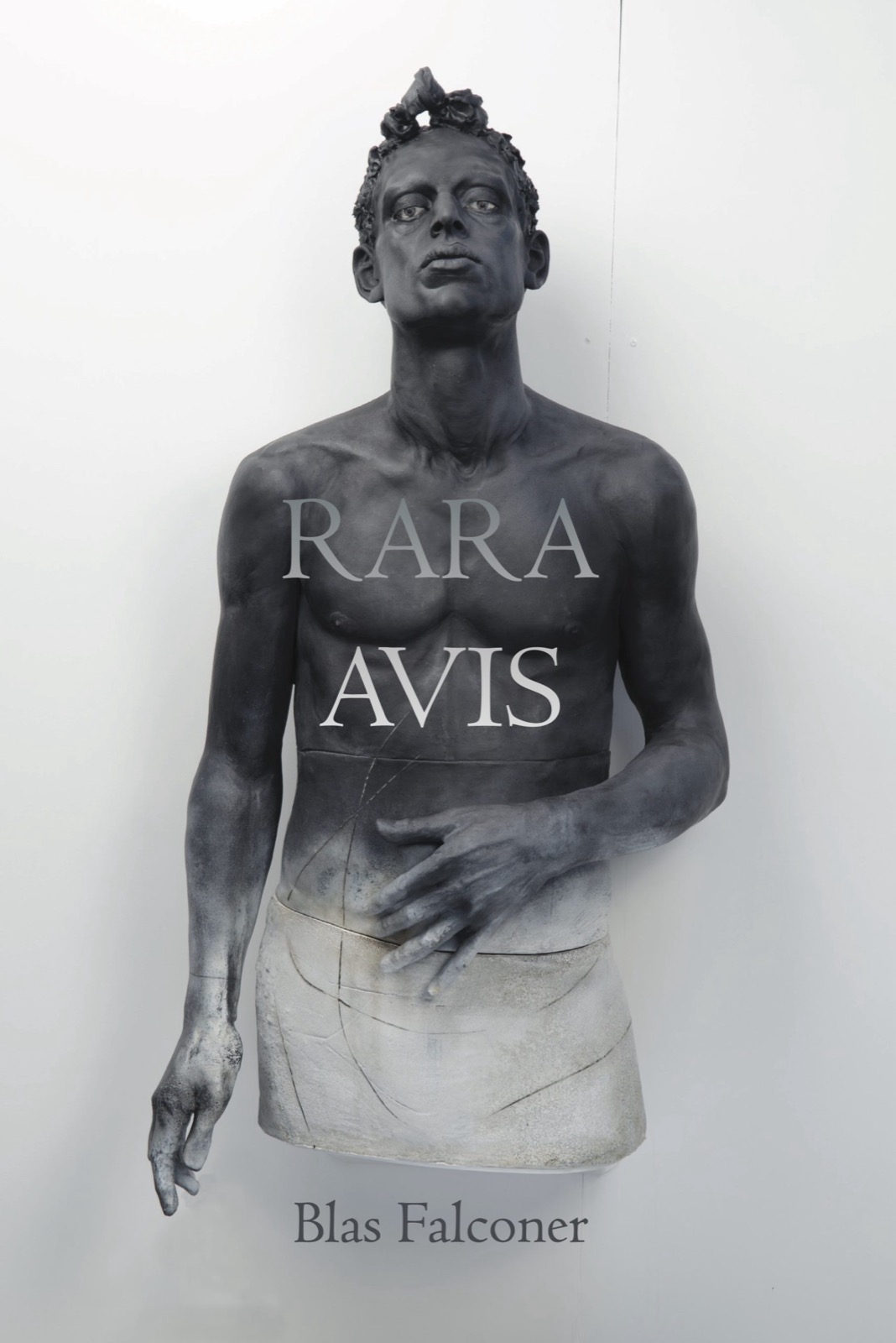
Praise for Rara Avis (Four Way Books, 2024)

“Rara Avis’s keenest ace is its clear-eyed focus on family care and dissonance and on the eureka of generational love and forgiveness. Falconer, the pioneering queer father of adopted sons, resists showiness and controversy by employing telltale silence and the sturdiness of longstanding but still expressive modes and forms— couplets, cento, ekphrasis. In these supple, affecting poems, Falconer averts predictability and dwells (and even heals) instead in the kingdom of epiphanic memory, of nuance and caesura—poetry’s kingdom.” —Cyrus Cassells, author of Is There Room for Another Horse on Your Horse Ranch
“In these exquisite and musical poems, Falconer seeks answers to the abiding question of who we are and what could have been. Beautiful meditations on fatherhood, the complications of our pasts, and the urgent present reach to us with outstretched arms. In poem after poem, we feel the light touch of a hand on our backs reminding us that we must slowly rise and greet what lies ahead, though the music of the past beckons us to linger. Falconer’s tender and wise poems are gentle reminders that we move forward because we are called to those we love. We move forward because we see in the periphery, the past still holds us in its care.” —Oliver de la Paz, author of The Diaspora Sonnets
“Blas Falconer could teach a master class on lyric subtext. Rara Avis’s precise, wrenching poems are all about the layering of what is said and unsaid; the strata that form of wound, scar, skin. “When I look / in the rearview, he turns toward peaks // in the distance,” observes a speaker of his newly sullen son, “and when I ask him / to explain, shaking his head, he sighs as if // it isn’t worth the trouble.” Falconer’s handling of boyhood, fathering, love, and masculinity in these pages is startling in its revelations and deeply necessary in its grief. I’ll be thinking about this collection for years to come.” —Sandra Beasley, author of Made to Explode
Online Reviews of Rara Avis
“The Rare Birds We Are” by Paula Stacey
“A Silver Bowl of Stars” by Marina Kraiskaya
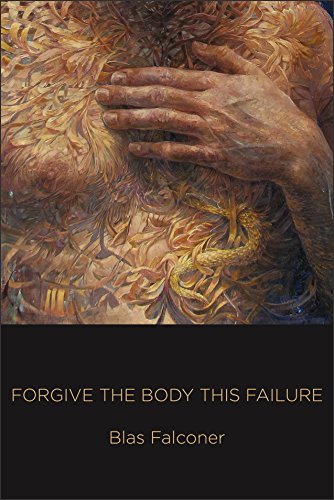
Praise for Forgive the Body This Failure (Four Way Books, 2018)

“Blas Falconer will look into your heart and tell you about it.” —Kazim Ali, author of Inquisition
“Blas Falconer’s book of poems, Forgive the Body This Failure, is the brilliant work of a seeing poet, but it’s what the poet does with what he sees that truly mesmerizes. Falconer looks at the world with a chiseled eye, refracts what he sees, and whispers it into our ears in fragments–what we are left with is something akin to wind–it comes and goes and we fill in the space with our imaginations; thus reading Falconer’s work is like hanging in suspension, in between space, alight, always waiting hungrily for the next whisper. Falconer’s poems are sparse, beautiful, and breathtaking and what a gift this poet and his poems are to the world!” —Victoria Chang, author of Barbie Changand The Boss
“The bittersweet beauty of Blas Falconer’s Forgive the Body This Failure comes alive with the recognition that the heart breaks and through its ache must continue to navigate further emotional pain. These arresting poems move with the complex currents of familial relationships, the strains of joy, love, and loss—all of those remarkable struggles endured by the body’s graceful resilience: ‘Language// can’t exhaust/ us. We’ve sung// every/ pitiful note.’ An exquisite collection!” —Rigoberto González, author of Unpeopled Eden
Online Reviews of Forgive the Body This Failure
“A Gentle Reckoning” by Dameion Wagner
“Forgive the Body This Failure” by David Keplinger
“Reconciled to Imperfection” by Maria Browning
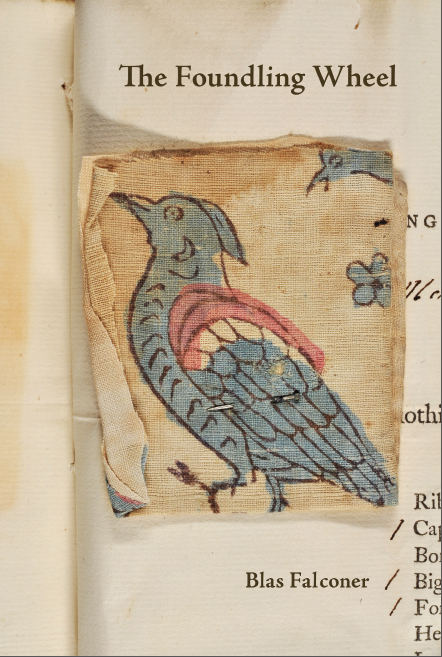
Praise for The Foundling Wheel (Four Way Books, 2012)
“The pastoral is the lyric of a landscape. Blas Falconer’s landscapes—and the people he places in them—elevate the pastoral to a level where the music has the force of an idea, in a language at once symbolic and probic. His “Field Marks for Birds,” his “Warm Day in Winter,” his “Bluffs of Pico Duarte” become interiors of association and moral conviction, and the book they appear in, The Foundling Wheel, a force in itself.” —Stanley Plumly, author of Old Heart
“The Foundling Wheel is a book of homecoming, a journey whose course follows flickering signs and thrilling undercurrents to arrive at a joy “without likeness or memory.” Inclusive, spare, intimate, wily, and precise, the poems in Blas Falconer’s second collection fulfill their author’s opening vow: “to cut the fruit and not think / of the heart, to think of it and not flinch / or flinch and cut through its core all the same.” In facing “all fair and foul, lush and bare,” Falconer turns survival and surrender into bittersweet sources of praise.” —Phillis Levin, author of May Day
.Online Reviews of The Foundling Wheel
“The Foundling Wheel by Blas Falconer,” by Eric Moraga, Poetix (September 2014)
“The Foundling Wheel by Blas Falconer,” by Laurie Clements Lambeth, Pebble Lake Review (Spring 2013)
“The Foundling Wheel by Blas Falconer,” by Elizabeth McLagan, Poetry International
“The Foundling Wheel,” by Rodger LeGrand, The Adirondack Review
“The Foundling Wheel by Blas Falconer,” by Walter Holland, Lambda Literary
“Life’s Most Overwhelming Love,” by Maria Browning, Chapter 16
.
Praise for A Question of Gravity and Light (University of Arizona Press, 2007)
“Blas Falconer illuminates the transitory nature of all human satisfaction and comfort. Reading this work animated, enlivened, and impelled my own imaginative sense of the possibilities for meaning present in the world around me.”—María Meléndez, author of How Long She’ll Last in This World
“Blas Falconer pursues Puerto Rico, sexuality, and the power of objects. This book powerfully maps what has been lost, what can be stolen, and what can be reclaimed.” —Rane Arroyo, author of How to Name a Hurricane
Online Reviews of A Question of Gravity and Light
“The Exiled Voice: Poet Blas Falconer explores the fear and the yearning of the outsider,” by Maria Browning, Nashville Scene
“A Journey of Want,” by Emily Pérez, Latino Poetry Review
“Blas Falconer’s A Question of Gravity and Light, by Yasmin Nair, (originally published in the Windy City Times)
.
Praise for The Perfect Hour (Pleasure Boat Studio, 2006)
“The Perfect Hour is stunning: lyrical, fierce, and always elegantly crafted. These poems mark the debut of a most promising new voice in American poetry. Blas Falconer is a poet to watch.” —Lisa D. Chávez, author of In an Angry Season
.
.
.
The Foundling Wheel, A Question of Gravity and Light, and The Perfect Hour are available at at your local, independent bookstore and at Amazon.
.
.